
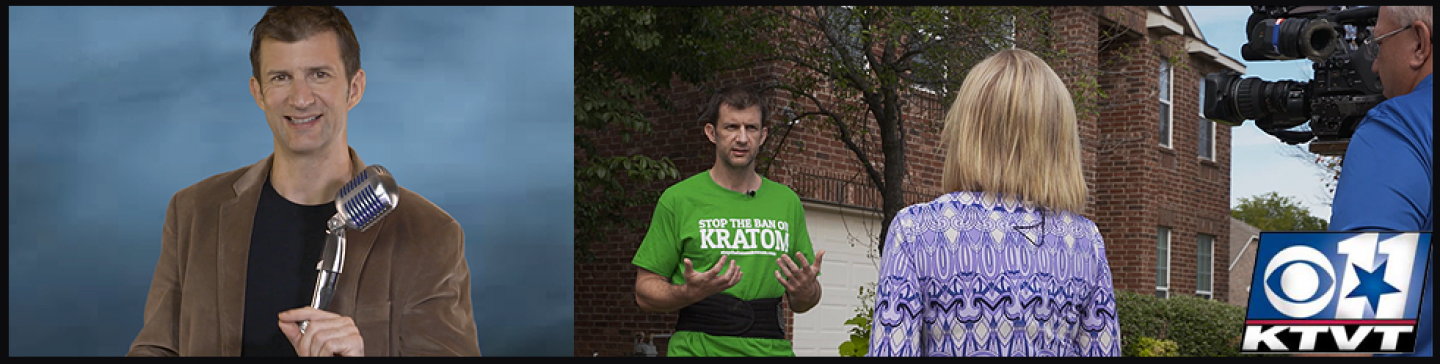
I am excited to announce one of the most significant projects of my psychology doctoral program and my professional career. I have completed all coursework and examinations at California Southern University and am currently a doctoral candidate. Over the course of my training and field experience, I have developed a system for conversational persuasion that I am now expanding into a full book series.
This system is a direct continuation and evolution of the work of Dr. George Thompson, author of Verbal Judo. Verbal Judo was originally given to me by my captain when I was a Military Police Officer, and later again by Kent Moyer, the president of World Protection Group, who was my former boss when I worked as a celebrity bodyguard in Beverly Hills. Kent Moyer was also a cop and a member of the Orange County Sheriff’s Department Diplomatic Protection Unit, and I trained frequently alongside that unit.
Verbal Judo sold millions of copies and became a staple in law enforcement, security, and sales training for decades. It shaped how an entire generation of professionals thought about verbal de-escalation and communication under pressure. However, modern law enforcement and other compliance-driven professions now operate in a far more complex, culturally driven, and adversarial environment. The communication challenges of today require updated material that goes beyond de-escalation alone.
Verbal Jiu-Jitsu continues where Verbal Judo left off.
I initially attempted to submit this work as my doctoral project. I was told that the idea was too novel and lacked sufficient academic precedent, which makes sense given how doctoral research is evaluated. The chair assisting me with my doctoral project read the work, appreciated the system and its psychological foundation, and recommended that I publish it as a book instead.
In May of 2025, I officially registered the concept of Verbal Jiu-Jitsu with the United States Copyright Office, and I am now developing it into a full book series with manuals tailored for specific industries.
LINK TO VERBAL JIU-JITSU TRADEMARK REGISTRATION: https://trademarkregistration.app/Trademark/ViewUSPTODocument?serialNumber=99074336&documentId=AMC20251116210219
This project brings together everything I have learned over the past twenty years in communication, military police work, law enforcement, persuasion psychology, sales, hypnotherapy, and competitive Brazilian Jiu-Jitsu.
What is Verbal Jiu-Jitsu?
Verbal Jiu Jitsu is a persuasion system I created that applies the same principles that made Jiu Jitsu, the art of submission, so effective and popular worldwide, especially after the early days of the UFC (mixed martial arts competitions).
In those early UFC events, people saw something surprising. Smaller, calmer, more technical fighters were defeating opponents much larger and stronger than themselves. They were not winning through strength or aggression. They were winning through leverage, timing, positioning, and strategy.
In physical Jiu Jitsu, leverage means using angles, balance, and moments of instability to gain control without relying on brute force.
In Verbal Jiu Jitsu, leverage means using a person’s own internal responses as openings in conversation.
These include:
• emotions
• contradictions
• reactions
• assumptions
• defensiveness
Instead of fighting resistance, Verbal Jiu-Jitsu uses it.
It is never about overpowering someone. It is about using strategy instead of force.
How verbal leverage works in simple terms
Redirecting emotion instead of fighting it
In Jiu Jitsu, if someone pushes hard, you pull. Their own force causes them to lose balance.
In conversation, if someone says, “Why are you bothering me?”
Most people push back.
Verbal Jiu Jitsu pulls.
“I hear that you’re frustrated. People usually feel that way for a reason. What’s going on?”
You use their emotional momentum instead of resisting it.
Using contradictions as leverage
In physical Jiu-Jitsu, a single mistake, such as an arm left extended, becomes the opening for control.
In conversation, contradictions work the same way.
If someone says, “I’m not upset, I just think everyone treats me terribly,”
they have revealed an internal conflict.
That contradiction is leverage.
You respond calmly.
“So something actually has been bothering you. Tell me what happened.”
They opened the door. You walk through it.
Calmness as control
In Jiu Jitsu, the calmer fighter usually wins.
In conversation, the calmer communicator gains control because their emotional balance highlights the other person’s imbalance.
These principles mirror exactly how leverage works in Jiu Jitsu competition.
Why I am building a book series
I originally developed Verbal Jiu Jitsu during my time as a Military Police Officer, later as a bodyguard in Beverly Hills, as a licensed real estate broker, as a sales trainer, as a psychotherapist in training, and through my doctoral research on persuasion and compliance in law enforcement.
I realized something important.
People in high-pressure professions desperately need a system for gaining compliance and influence without force.
That includes:
• law enforcement officers
• detectives and interrogators
• attorneys and courtroom strategists
• insurance and financial sales professionals
• real estate agents and brokers
• car sales professionals
• corporate negotiators
• military personnel
• executive leaders
• customer service departments
• crisis communicators
• parents
• educators
• individuals working to overcome social anxiety
Different professions face different forms of resistance. Each book in the Verbal Jiu Jitsu series will apply the same core system to a specific vocation, with scenarios, scripts, and applications tailored to that field.
Why Jiu-Jitsu is the perfect model
Jiu-Jitsu became famous because it proved a simple truth.
The strategic mind beats the aggressive body.
It allows a smaller person to defeat a larger person through leverage, timing, and technique, not brute force.
Verbal Jiu-Jitsu works the same way.
It teaches how to:
• stay calm when others escalate
• redirect resistance instead of fighting it
• use contradictions and emotional openings
• guide people toward compliance without them feeling forced
• maintain control of conversations under pressure
If physical Jiu Jitsu is the art of submitting someone’s body, then Verbal Jiu Jitsu is the art of submitting resistance.
Writers and collaborators
To expand this system properly, I am assembling a team of writers, editors, and researchers to help develop industry-specific versions of Verbal Jiu-Jitsu.
These writers will not be inventing new ideas. The system already exists. The outlines already exist. The framework is already built.
The writers’ role will be to work directly with me to apply my existing model to specific professions and to fill out the manuals under my guidance.
The initial focus areas include:
• Verbal Jiu-Jitsu for law enforcement
• Verbal Jiu Jitsu for car sales
• Verbal Jiu Jitsu for real estate agents and brokers
• Verbal Jiu Jitsu for insurance agents
• Verbal Jiu Jitsu for parents
• Verbal Jiu Jitsu for overcoming social anxiety
Now I’m looking for a few good writers to help me expand this pre-existing model to multiple applications. The groundwork has already been done. The philosophy is already built. The only requirement is that the writers who assist are capable of applying these pre-existing notions and ideas to multiple vocational applications, which will be done under my guidance. If interested in collaborating with me, email me at semperfi.aal@gmail.com or WhatsApp +18179038570. Thanks, Anthony